
Benchmark Analysis on TidesDB v8.1.1, RocksDB v10.10.1, and LMDB v0.9.24

published on February 4th, 2026
I came across a post by the Small Datum blog (Mark Callaghan) and in the comments there was some dicussion that inspired me to add LMDB to the benchtool and run some benchmarks across TidesDB, RocksDB, and LMDB.
Environment
- Intel Core i7-11700K (8 cores, 16 threads) @ 4.9GHz
- 48GB DDR4
- Western Digital 500GB WD Blue 3D NAND Internal PC SSD (SATA)
- Ubuntu 23.04 x86_64 6.2.0-39-generic
- TidesDB v8.1.1 (Compressed Block KLog format with LZ4 compression)
- RocksDB v10.10.1 (Compressed with LZ4 compression)
- LMDB v0.9.24 (Lightning Memory-Mapped Database)
- GCC (glibc)
Write Throughput Comparison
Write Latency Comparison
Write Amplification Comparison
Read Throughput Comparison
Read Latency Comparison
Range Query
Seek Performance
Mixed Workload
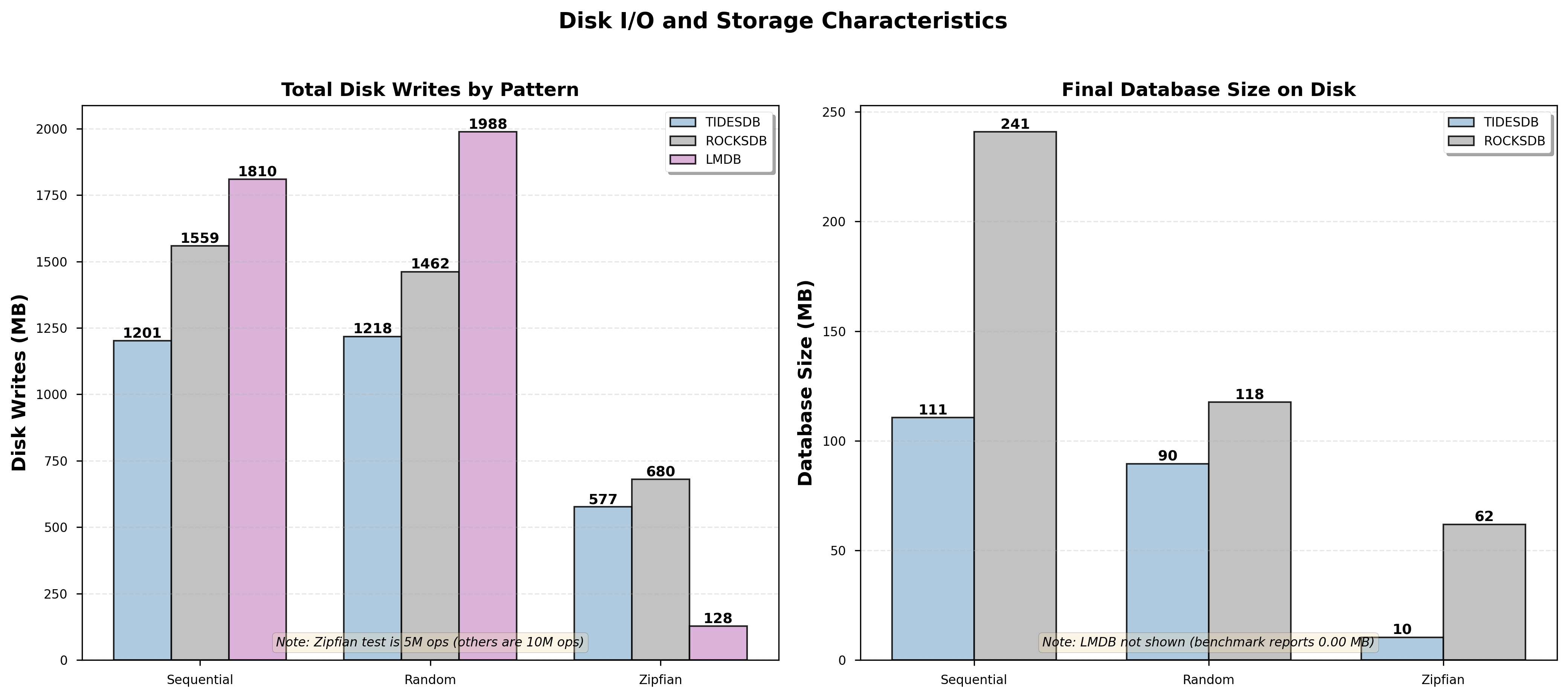
Disk Usage
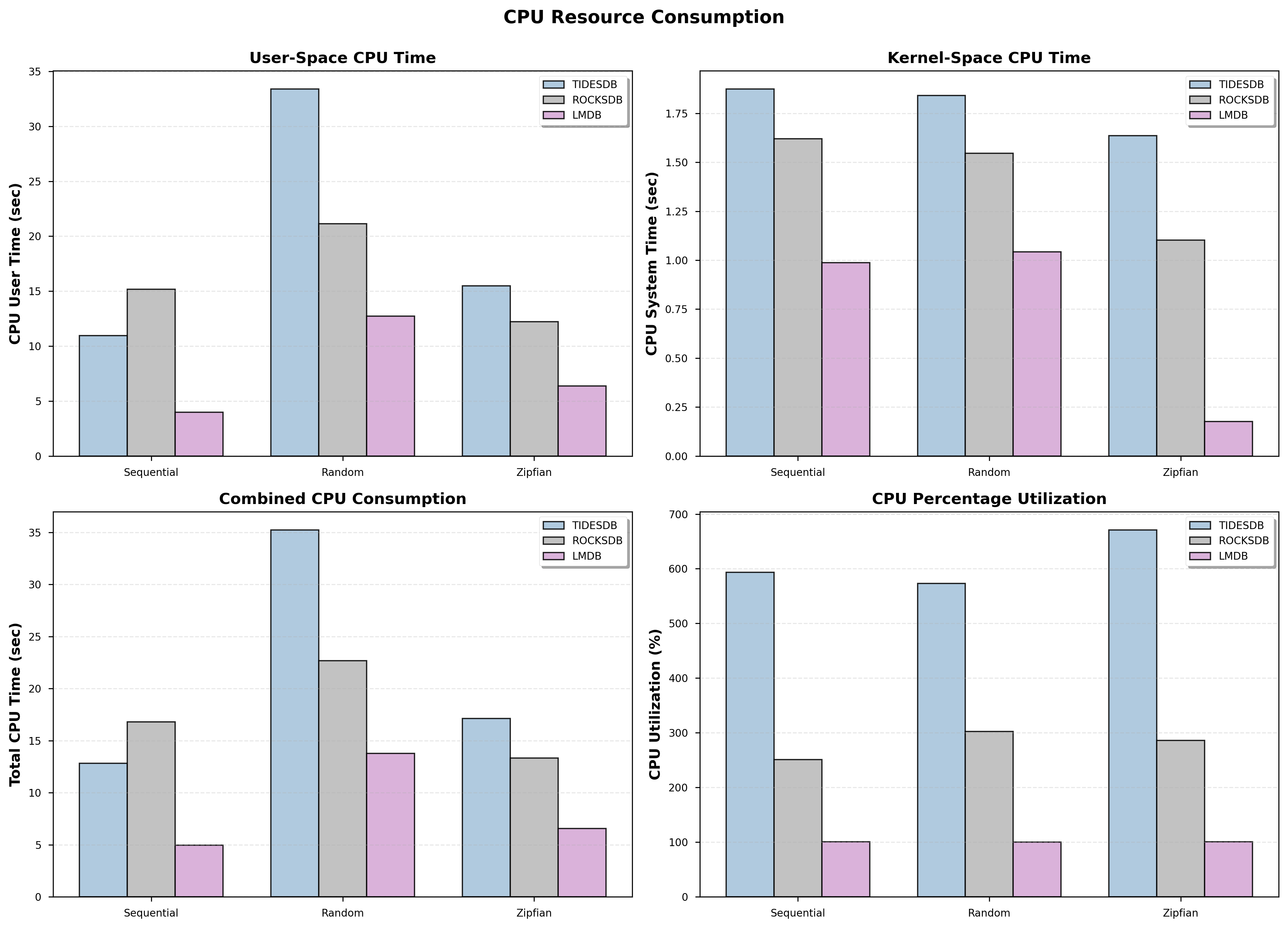
CPU Usage
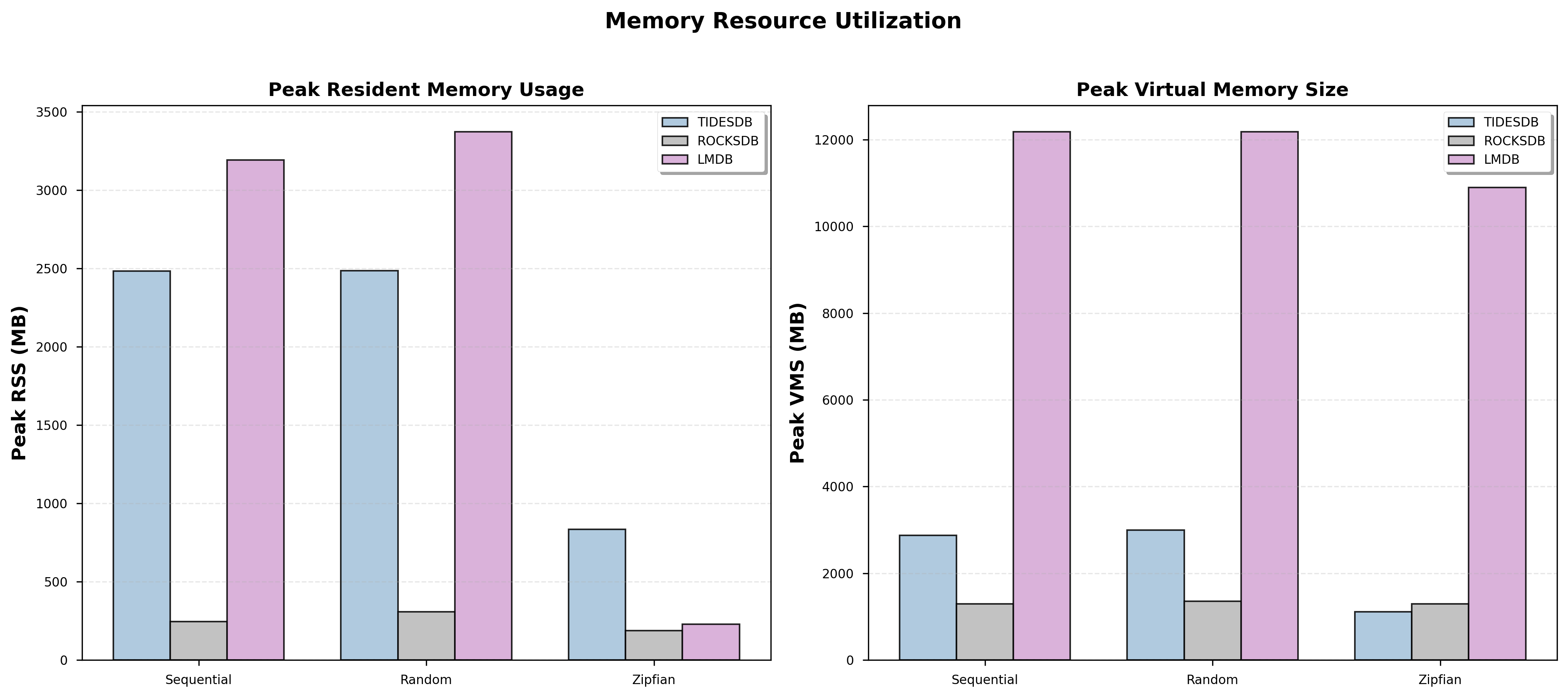
Memory Usage
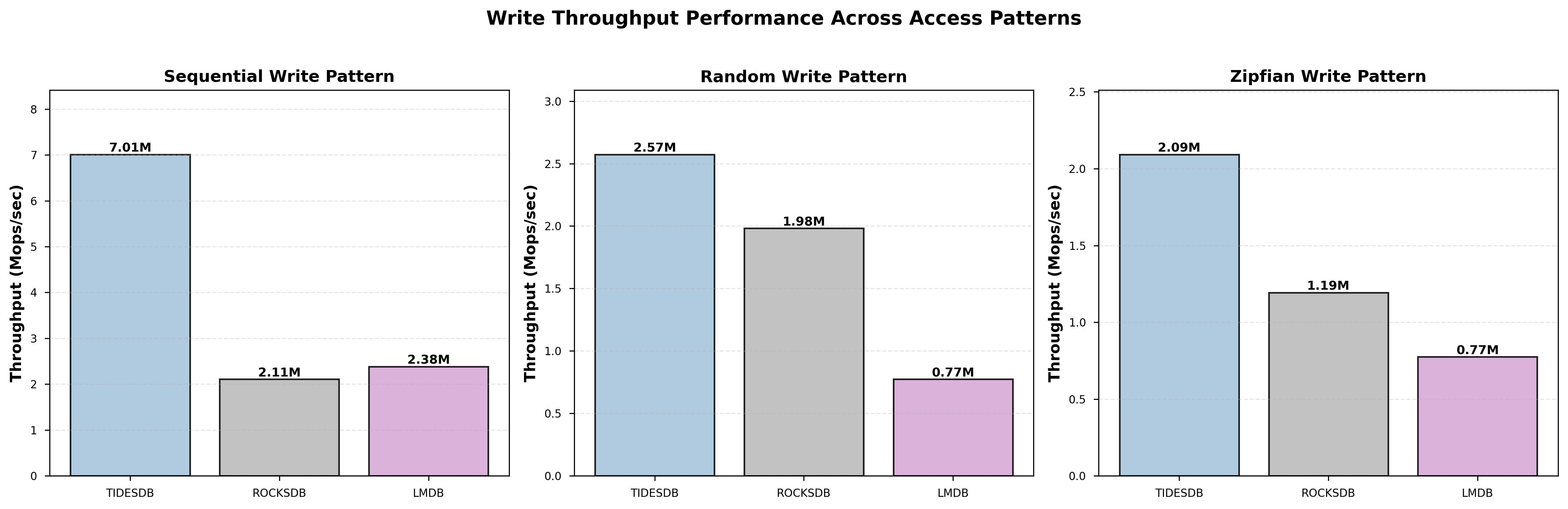
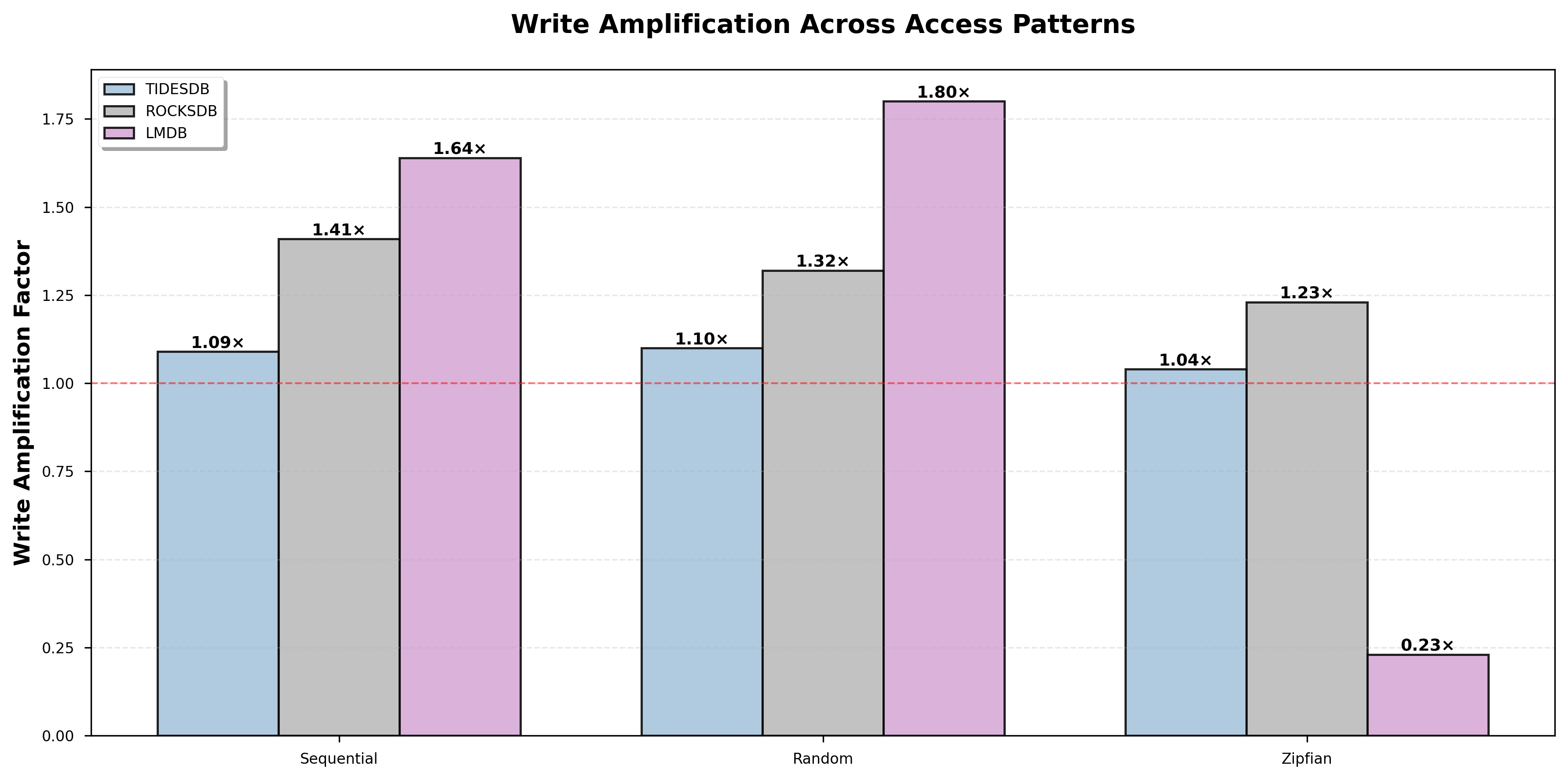
TidesDB achieves 7.01 Mops/sec for sequential writes compared to RocksDB’s 2.11 Mops/sec and LMDB’s 2.38 Mops/sec. This advantage narrows under random access patterns, where TidesDB delivers 2.57 Mops/sec versus RocksDB’s 1.98 Mops/sec and LMDB’s 0.77 Mops/sec. The write amplification measurements show TidesDB at 1.04-1.10x across patterns, RocksDB at 1.23-1.41x, and LMDB at 1.64-1.80x.
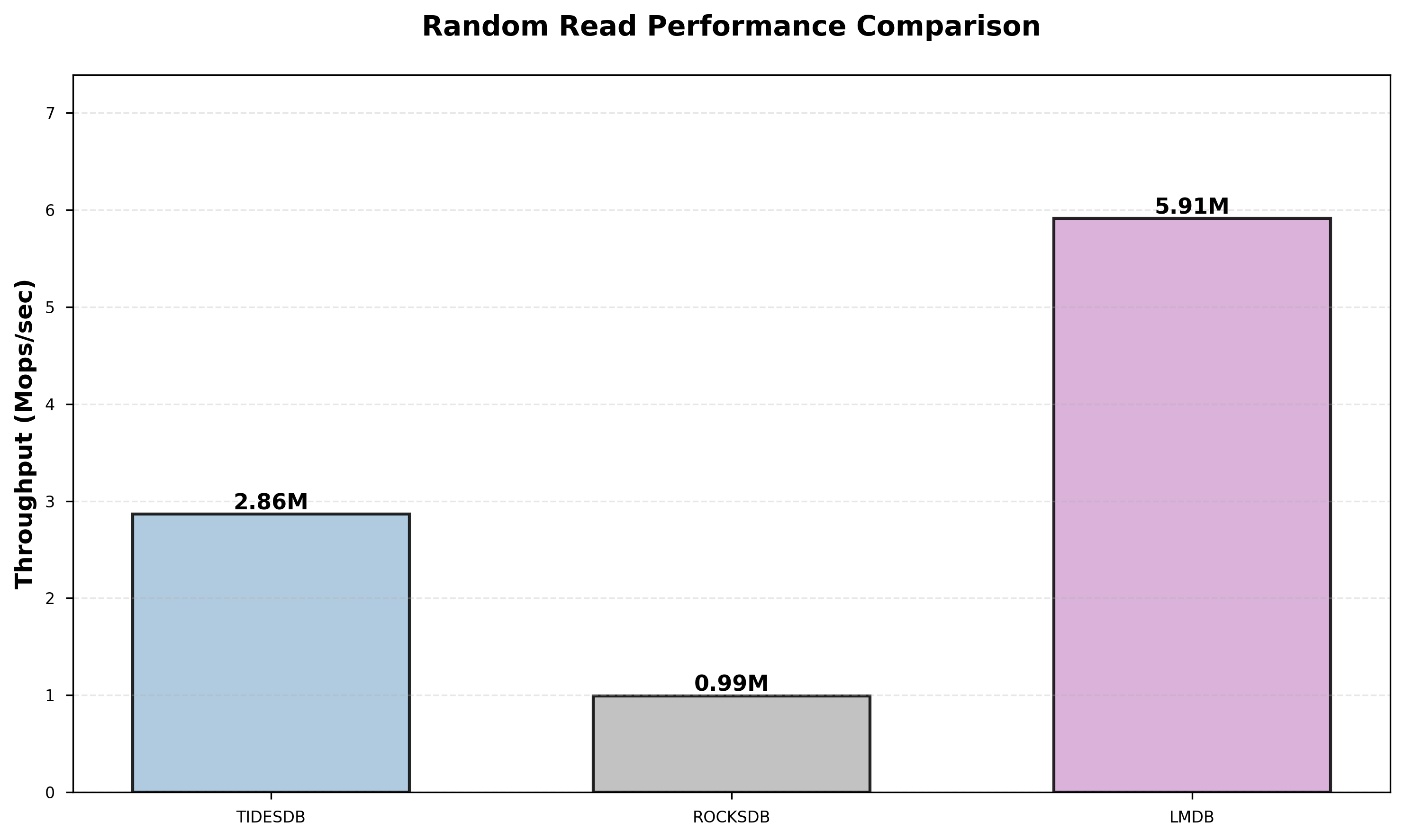
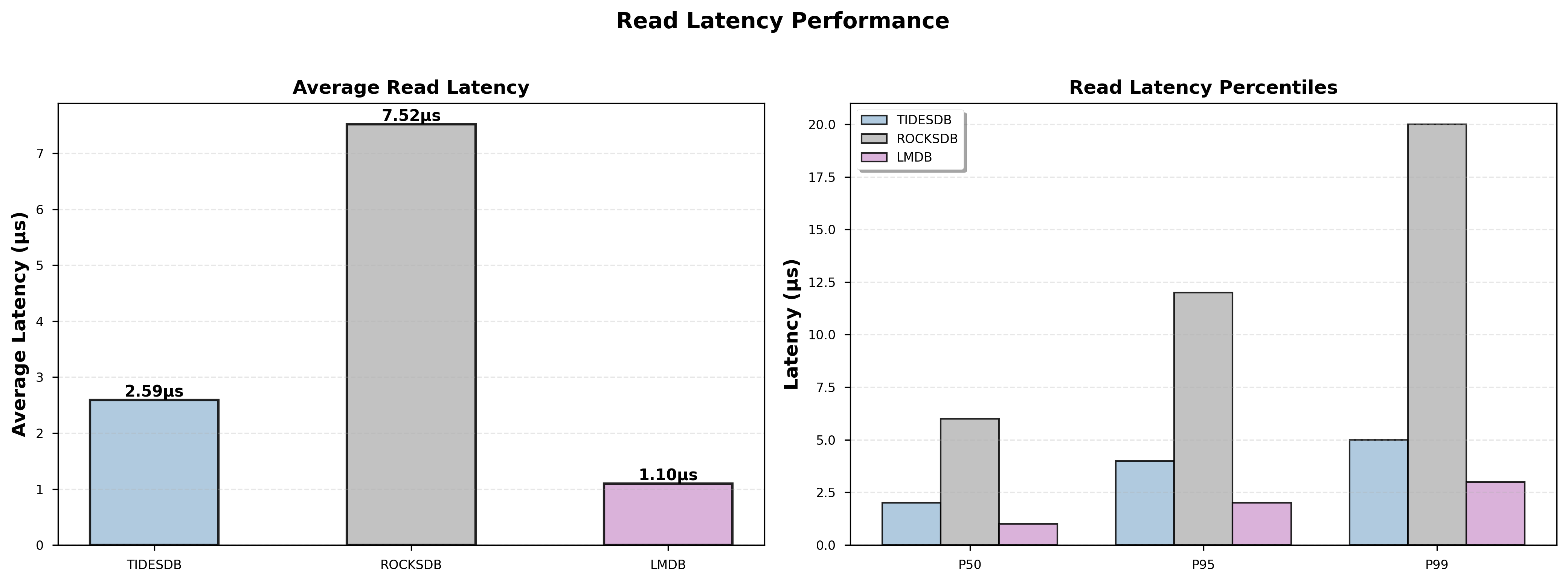
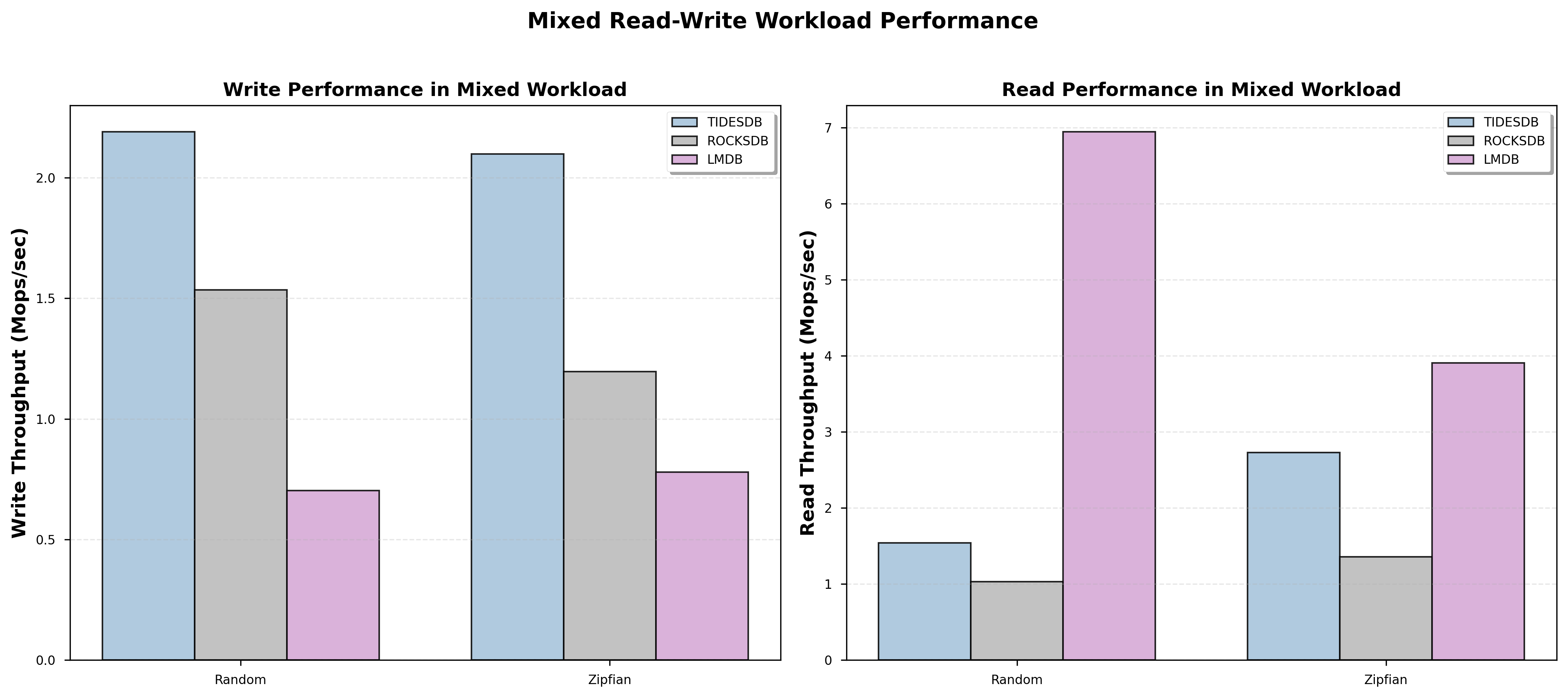
For read operations, LMDB dominates with 5.91 Mops/sec and 1.10μs average latency, benefiting from its memory-mapped architecture. TidesDB shows 2.86 Mops/sec with 2.59μs latency, while RocksDB trails at 0.99 Mops/sec and 7.52μs. In mixed workloads (50/50 read-write), TidesDB maintains 2.19 Mops/sec writes and 1.54 Mops/sec reads, RocksDB shows 1.53/1.03 Mops/sec, and LMDB exhibits asymmetric behavior at 0.70/6.94 Mops/sec.
Resource utilization reveals TidesDB uses 2,483MB RSS with 573-671% CPU utilization across 8 threads, RocksDB uses 246-308MB RSS with 251-302% CPU, and LMDB uses 3,194-3,373MB RSS with 100% CPU.
That’s it for this article, it’s a short one, if you want to do a deeper dive on the data you can find the raw benchtool data in the article footer.
Thanks for reading!
CSV Data:
Thank you @TheSeyan for the feedback and suggestions!